
About Peripheral Visions

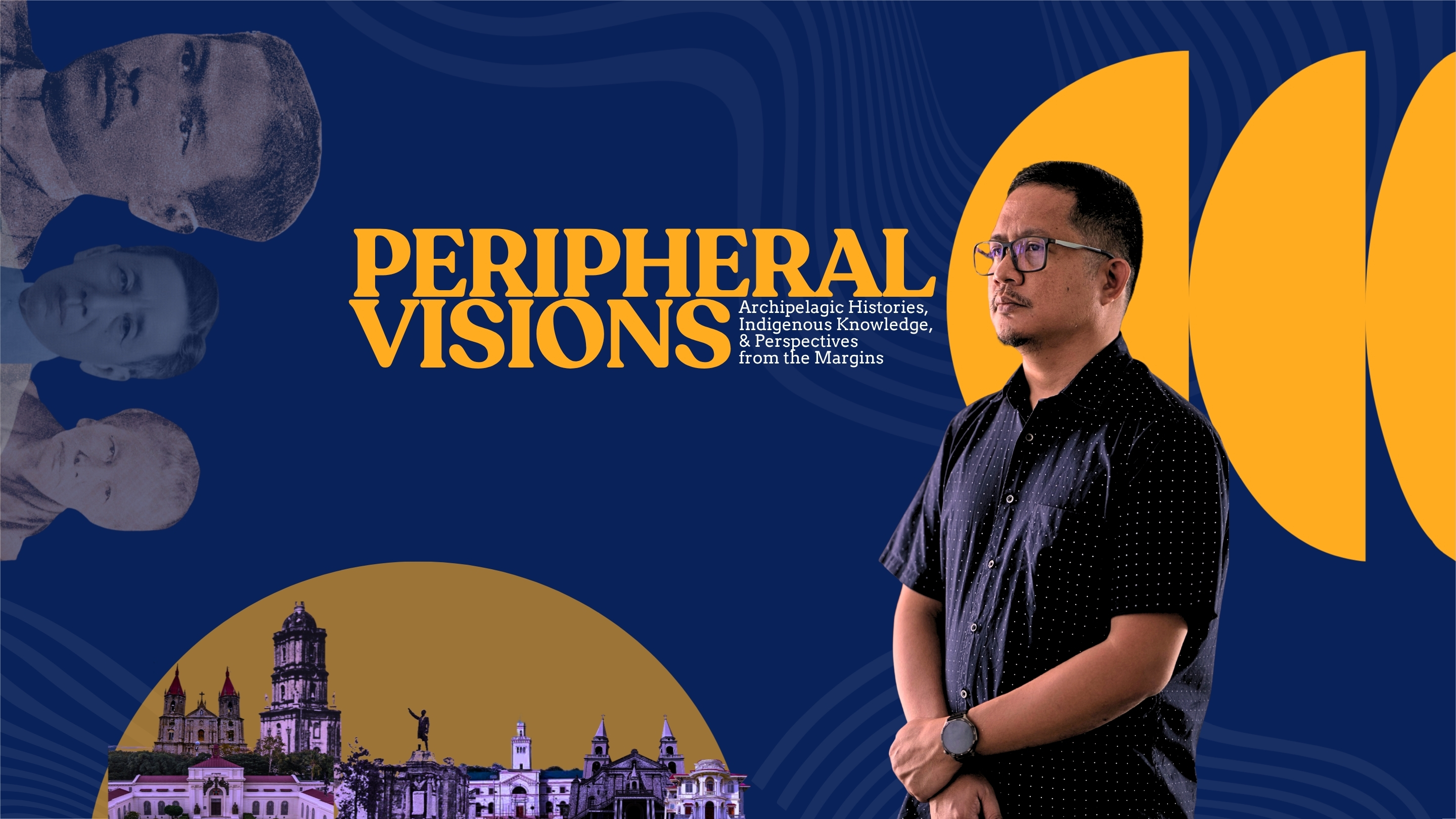
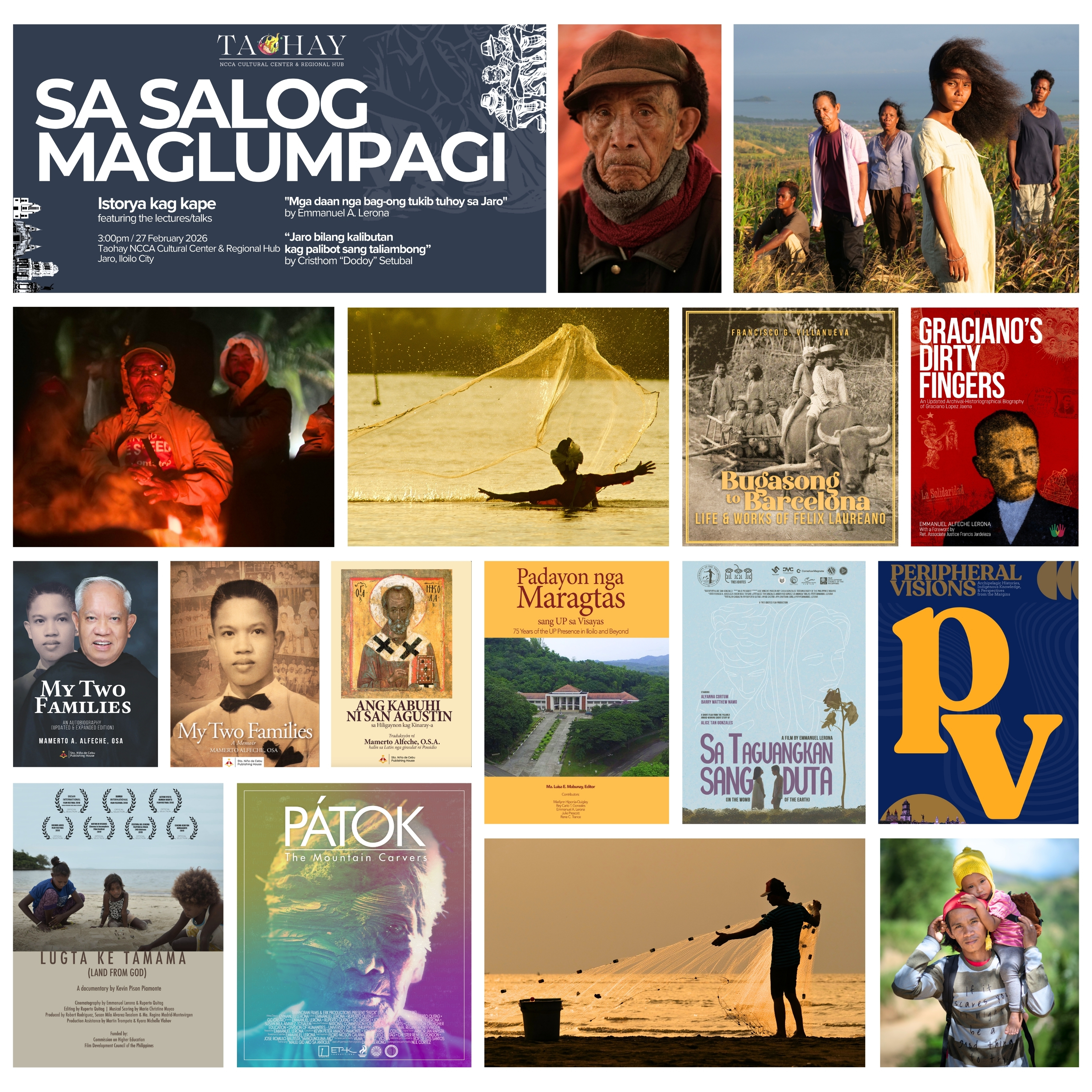
Peripheral Visions features work across film, photography, historical research, translation, and cultural documentation. Its title comes from an interest in looking toward the margins—toward regions, archives, communities, and knowledge systems that are often overlooked, yet from which other histories and meanings come into view.

The site gathers projects that move between the archive and the field, and between scholarship and creative practice. It is shaped by a sustained engagement with regional history, Indigenous knowledge, language, and memory, and by the belief that the margins are not merely peripheral, but vital vantage points for understanding culture more fully.

Graciano’s Dirty Fingers, a new biography of Graciano López Jaena, launched at the National Museum of the Philippines – Iloilo

Video highlights of the book launch and panel discussion at the National Museum of the Philippines – Iloilo last 18 December 2025 / Ruperto Quitag/FUPVHS Foundation, Inc.

Graciano’s Dirty Fingers, a new book by Emmanuel Alfeche Lerona, was launched on December 18, 2025, at the National Museum of the Philippines – Iloilo in a program organized by the Friends of UP Visayas High School Foundation, Inc. in partnership with the museum. The event was billed as a book launch and panel discussion.

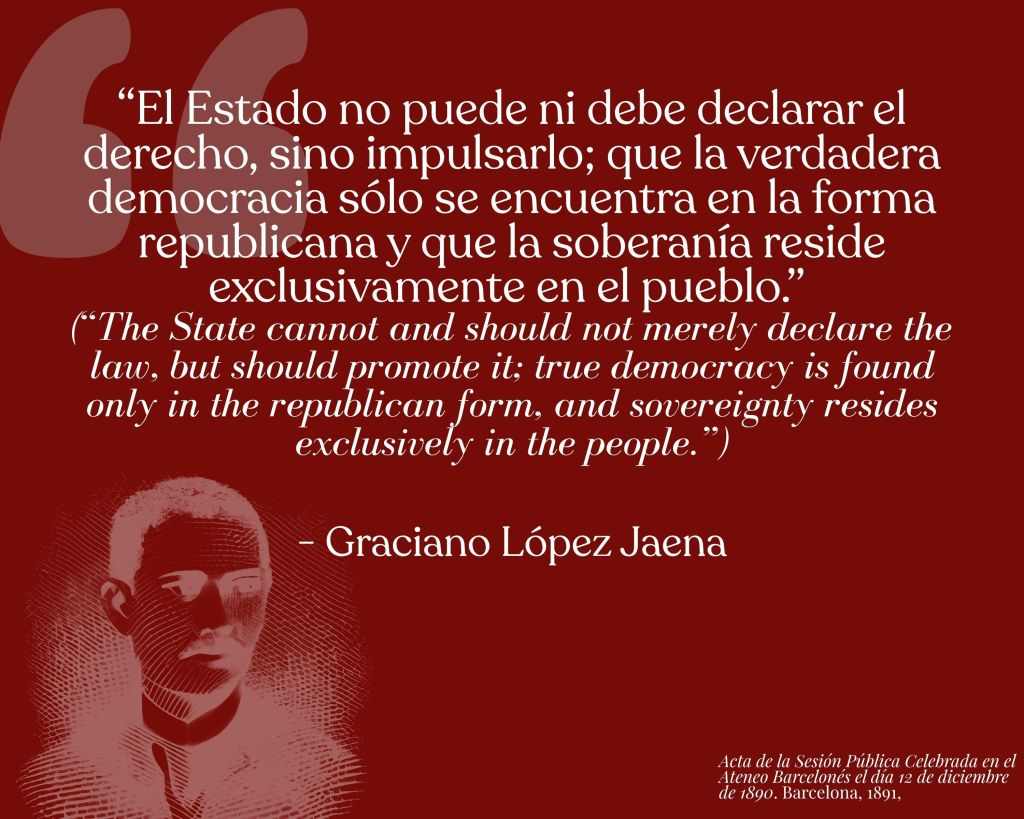
The program introduced the book as “an updated archival-historiographical biography” of Graciano López Jaena, grounded in newly recovered primary sources from the Philippines and Spain, including letters, periodicals, official records, and unpublished documents. It framed the work as a reexamination of López Jaena’s political thought, journalistic work, networks in Spain, and role in the Propaganda Movement, situating him within broader Spanish republican and anti-colonial currents of the late nineteenth century.

The program also included a panel discussion titled “Counter-Archive as Historiography” that included Genevieve L. Asenjo, Ma. Luisa E. Mabunay, Stephen B. Alayon, Mia Fe Lopez Cruz, and Berks Joseph Barrios Tan. The panel discussion centered on how historical research can function as a counter-archive by challenging dominant narratives and surfacing marginalized or silenced voices.

Published by the Friends of UP Visayas High School Foundation, Inc., Graciano’s Dirty Fingers was edited by Ma. Luisa E. Mabunay, Marilynn Hiponia Quigley, and Francisco G. Villanueva. Villanueva had earlier called for a reassessment of López Jaena’s reputation in his lecture , urging a move beyond anecdotal portrayals toward archival verification. Mabunay, a retired UP Visayas professor, has worked extensively on local history and edited institutional histories, while Quigley is a poet and writer active in Filipino diaspora communities. Villanueva, an educator and cultural worker, has also published Bugasong to Barcelona: Life and Works of Felix Laureano (2025).

The book has drawn responses from scholars, archivists, and writers. UP Diliman History professor Kristoffer Esquejo describes it as “an innovative look at the life of a misunderstood historical figure,” citing its use of digitized Spanish newspapers and newly accessible archival sources. Research fellow and librarian Reysa Alenzuela characterizes it as “a decentered and deeply archival biography” marked by a “meticulous use of primary sources,” while Universidad de Valencia archive specialist María Irene Manclús Cuñat emphasizes its reconstruction of López Jaena’s life through “fuentes primarias: cartas, diarios, artículos de prensa, documentos oficiales, fotografías y otros materiales,” underscoring its commitment to verifying competing narratives through archival research.

Cultural worker and writer Vic Salas describes the book as “a major contribution to understanding an underrated and often maligned hero, while setting a standard for future historical work.” UPV Professor Noel Galon de Leon characterizes it as “a bold confrontation of the falsehoods and misleading narratives long attached to Graciano Lopez Jaena,” pointing to its combination of digital archival research, fieldwork in Spain, and engagement with primary documents. Historian Xiao Chua notes that the study not only presents biographical detail based on newly examined sources but also situates López Jaena within broader Philippine colonial and local histories, describing it as “an historiographic achievement.”

Other commentators underscore the book’s wider interpretive scope. UPV Professor and Faculty Regent Early Sol Gadong describes it as a “fitting portrait” of one of the country’s most underappreciated figures, while WVSU Professor Joyce Christine Colon notes that the biography captures both the political and personal dimensions of López Jaena’s life. Mia Fe Lopez Cruz, president of the Dr. Graciano Lopez Jaena Foundation and a descendant of López Jaena, characterizes the work as “an act of courage and reclamation,” arguing that it restores him “not as a myth, but as a man whose ideals remain urgent and alive.”

The project is supported by retired Associate Justice of the Philippine Supreme Court Francis H. Jardeleza, who serves as president of the Friends of UP Visayas High School Foundation, Inc.. Jardeleza set the project in motion by encouraging the development of a sustained, archive-based study of López Jaena. In his foreword, he underscores the importance of gathering dispersed materials from Philippine and Spanish archives in order to restore the historical record “to the dignity of fact.”

By assembling materials from multiple repositories and making them accessible to a wider readership, Graciano’s Dirty Fingers allows for a more grounded understanding of Graciano López Jaena, informed by primary documentation and historical context.

Visit this link to order a copy of Graciano’s Dirty Fingers.

Latest Posts

Projects and Practice

Emmanuel Lerona explores the intersections between scholarship and culture across film, photography, language, and Indigenous knowledge systems. He has directed a short film and a documentary, and has worked as a cinematographer and sound designer in several independent productions in Western Visayas. He has also worked as a behind-the-scenes photographer for a number of films shot in the region, as well as a book designer for several books produced in the region.

A former lecturer at UP Visayas, he has served as resource person in workshops across Western Visayas on photojournalism and media production, and was a fellow of creative writing workshops. He is currently completing his capstone for the Master in Development Communication at West Visayas State University as a member of the program’s pioneer batch. His work brings together field documentation, archival research, translation, and visual storytelling.

Collaborate

Collaborations, commissions, and inquiries about research, creative projects, exhibitions, or academic partnerships are welcome. Email emanlerona(at)gmail(dot)com or connect via Social Media to discuss ideas and timelines.