Originally published on Facebook 20 January 2026.
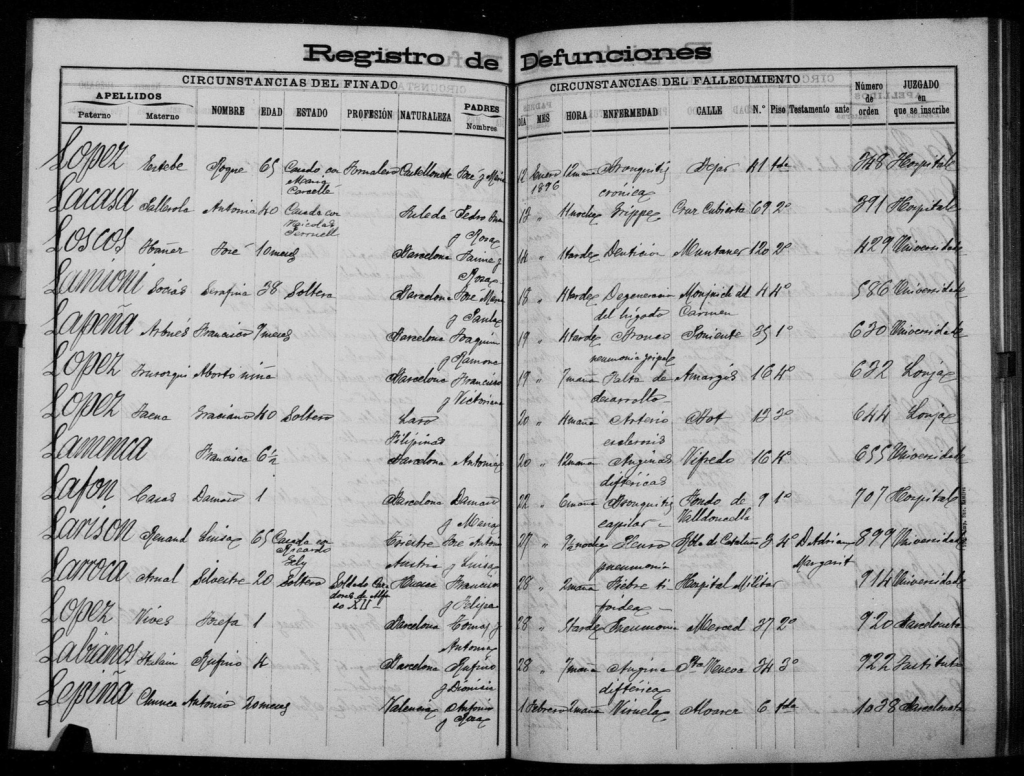
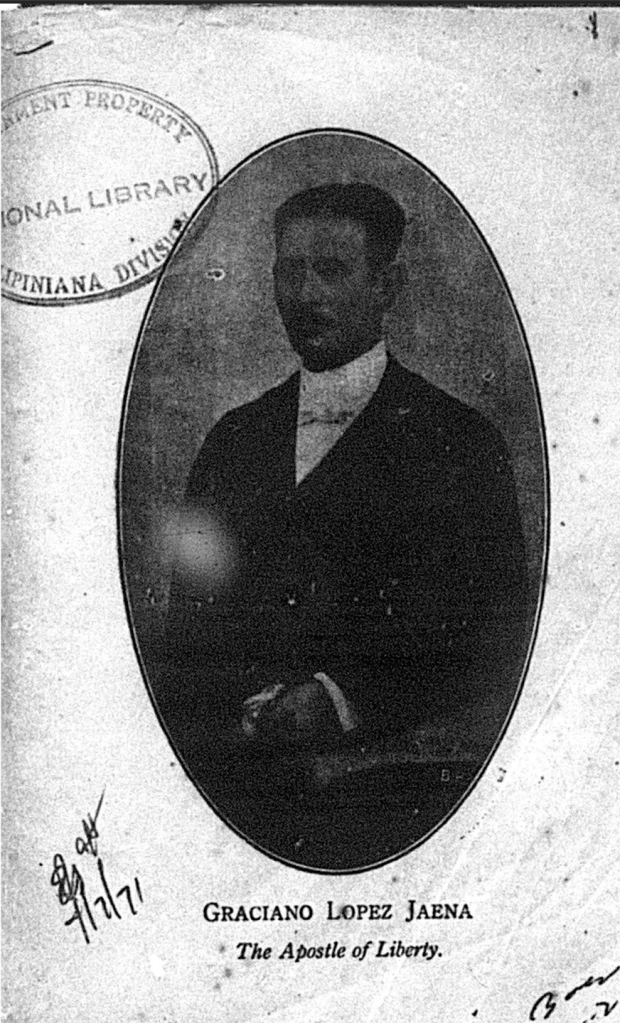
Today marks the 130th death anniversary of Graciano López Jaena. He died at about four o’clock in the morning on 20 January 1896, most likely alone, at his residence on Carrer d’en Bot (Calle del Bot) in Barcelona. Records list the cause of his death as not tuberculosis but arteriosclerosis [1]. He was buried at eight o’clock in the morning on 21 January 1896 at El Fossar de Pedrera, a common grave, within the Cementerio del Sud-Oeste, more popularly known today as the Cementiri de Montjuïc.
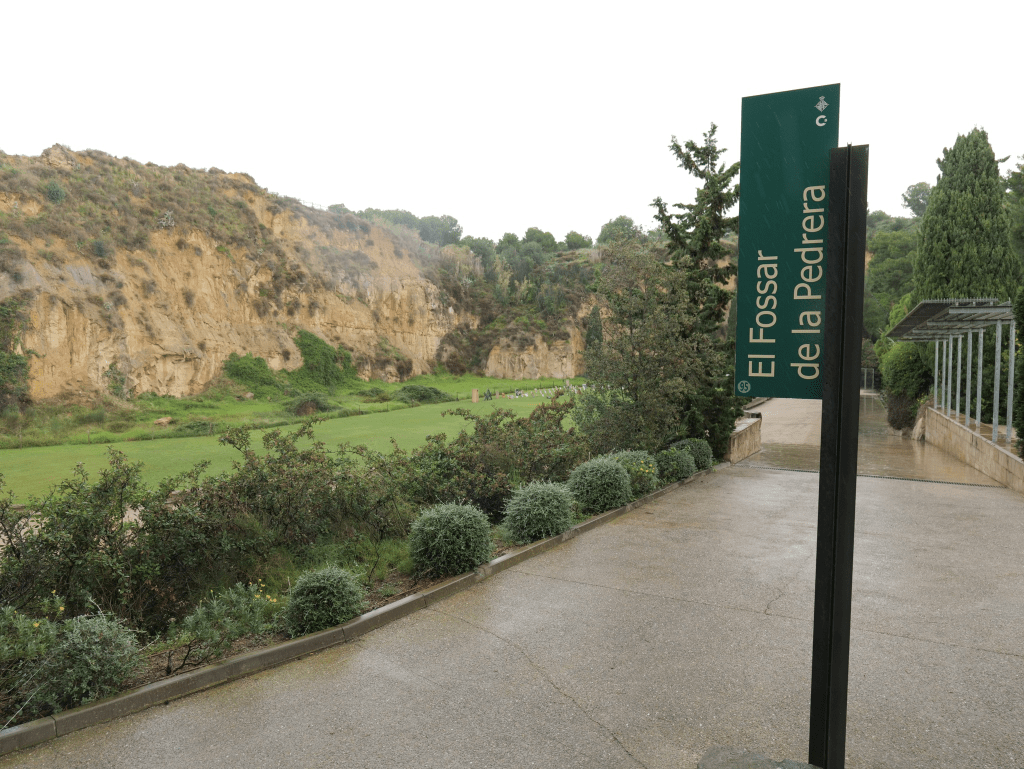
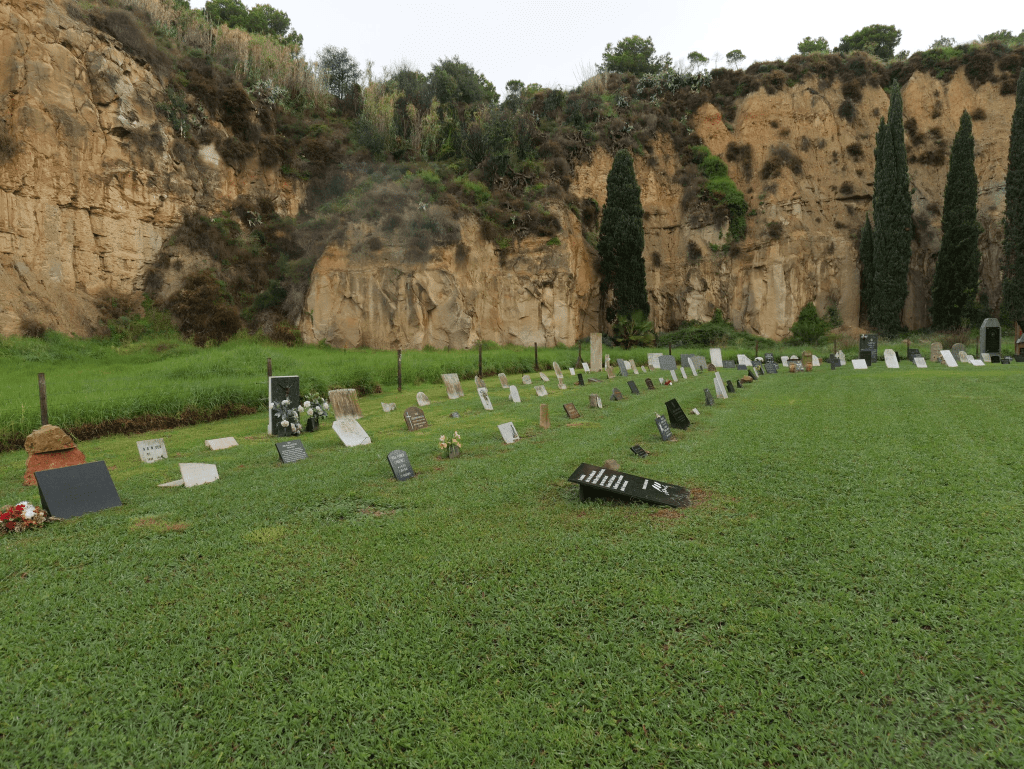
The burial took place without ceremony. Given the early hour and the use of a common grave, it is likely that, aside from the gravedigger, none of Graciano’s Filipino compatriots was present, which explains why later efforts to locate his remains for exhumation and repatriation to the Philippines were unsuccessful. This stands in contrast to the case of Marcelo H. del Pilar, whose remains were exhumed on 26 October 1920 [2].
In the years preceding his death, Graciano remained active in Republican politics and journalism, using Spanish Republican platforms to advance broader arguments especially for liberties that, of course, included the Philippine cause. After working on El Látigo Nacional in the last quarter of 1893, another Republican newspaper, La Autonomía, announced his appointment as director on 17 August 1894. Published in Reus, Tarragona, the paper had by then shifted from a weekly to a daily newspaper and carried the subtitle Diario republicano defensor del partido único, situating Graciano’s editorial work within the wider Republican struggle against monarchical rule while sustaining his long-standing advocacy for political reform in the Philippines.
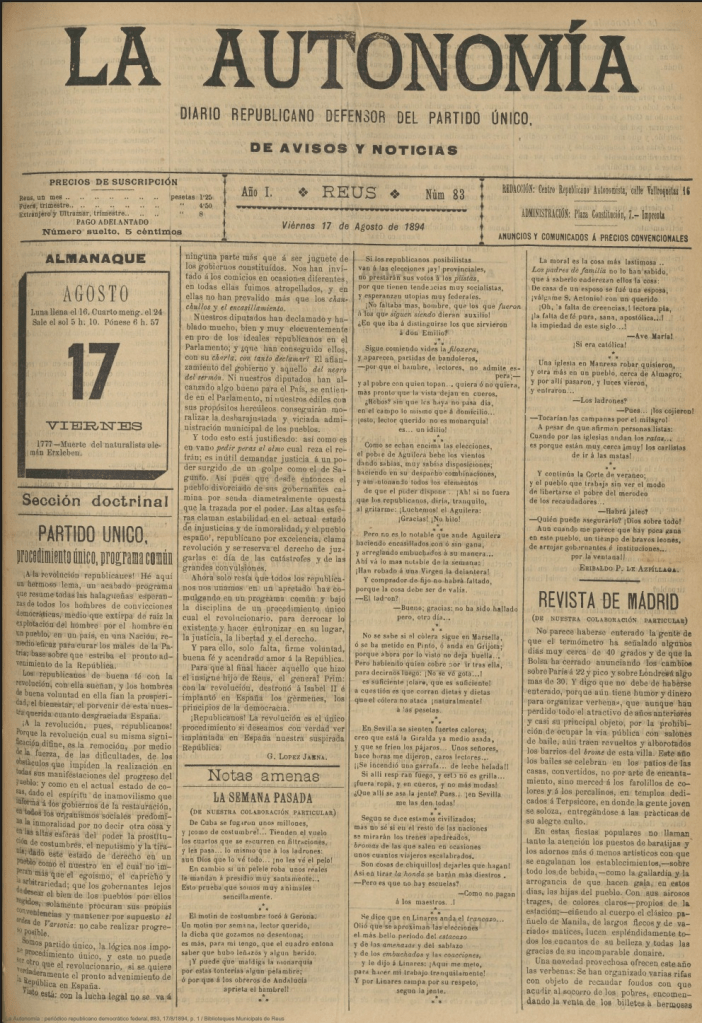
Just a few months later, however, on 17 November 1894, Graciano stepped down from the directorship for personal reasons. A notice in La Autonomía stated that his absence had been due to “la grave enfermedad,” most likely tuberculosis. During his illness, he was possibly admitted to the Hospital de la Santa Creu in Barcelona, where he was attended to “both physically and spiritually” by the Vincentian Sisters of Charity, who attested that, while Graciano was a freemason, “his final days on the bed of suffering were spent as a devout Catholic and fervent believer.”
While Graciano died of arteriosclerosis, documents also show that he had long suffered from pulmonary illness. In 1882, while enrolled in medical studies, he filed a petition to retake examinations in subjects he failed during the 1881–1882 academic year, citing illness caused by “catarrhal pneumonia.” This history of chronic pulmonary illness likely explains why many historical accounts identified tuberculosis as the cause of Graciano’s death.
But death did not end the documentary trace of Graciano’s name in the Philippines. In 1906, his brother Doroteo López executed notarized deeds transferring rights over family properties in Jaro, as well as all rights to Graciano’s writings and literary works, to Marciano López, the son of their cousin Eustaquio López of Silay, Negros. It is hoped that some of these works have survived, remain preserved, and may yet be recovered and rediscovered by the descendants of Eustaquio and Marciano.
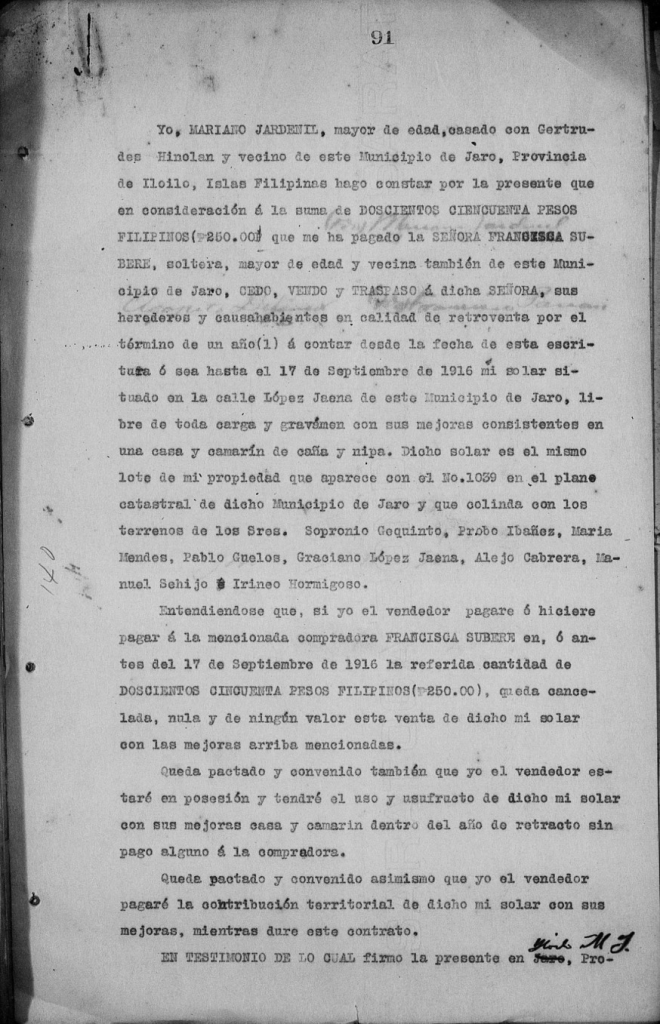
Graciano’s name appeared again in 1915 in an Iloilo notarial record. A deed dated 17 September 1915 records the sale of an urban lot (solar) located on López Jaena Street, identified as Cadastral Lot No. 1039. In the boundary description, Graciano is explicitly named as the owner of an adjoining lot, alongside the properties of Sopronio Gequinto, Probo Ibañez, Maria Mendos, Pablo Guelos, Alejo Cabrera, Manuel Sehijo, and Irineo Hormigoso [3].
One hundred thirty years after his death, the records surrounding Graciano López Jaena show why records matter. Certificates, newspapers, hospital records, and deeds help correct “histories” that persist despite errors simply because no one bothered to validate them. As more records in Spain and the Philippines surface, become digitized, and are made publicly accessible, these materials demonstrate how checking the records can clarify what truly happened, not only in the distant past, but also in situations where facts are obscured by neglect, convenience, or power. They serve as a reminder that when records are destroyed, hidden, delayed, or selectively used, misrepresentation can persist. When records survive and are examined, unjustly damaged reputations can be restored, and those who propagated falsehoods can be held accountable.
Selected References:
[1] “España, Provincia de Barcelona, registros municipales, 1387-1986,” database with images, FamilySearch (https://familysearch.org/ark:/61903/3:1:939Z-54KD-M?cc=2015324&wc=QZ7W-F3D%3A335015101%2C335015102%2C335532101 : 8 July 2015), Barcelona > Barcelona > Registro de defunciones 1894-1897 > image 1603 of 2793; Servicio de Archivos de la Generalitat (Archives Service of the Generalitat), Barcelona.
[2] La Veu de Catalunya, 27 October 1920
[3] “Iloilo City, Iloilo, Philippines records,” images, FamilySearch (https://www.familysearch.org/ark:/61903/3:1:3Q9M-CSCT-2Q59?view=explore : Jan 20, 2026), image 218 of 226; .
Image Group Number: 007931218
 Peripheral Visions
Leave a comment